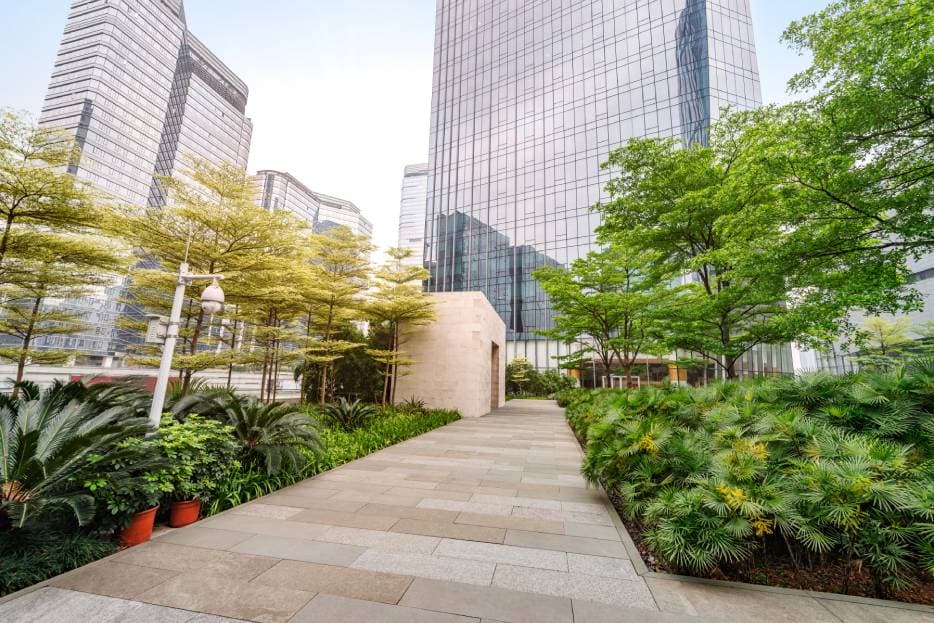
Benefits of Green Areas in Corporate Spaces
The integration of nature into work environments has moved beyond being a decorative resource and has become a functional component within corporate architecture. Green areas influence dynamics ranging from operational efficiency to how employees perceive their work environment.
This is why planning exterior and interior spaces with vegetation connects with other key aspects such as maintenance and corporate image, as well as the upkeep of glass, partitions, and business facades, creating visual and operational coherence that directly impacts the organizational experience.
This relationship between nature and productivity has been supported by various approaches in environmental psychology and corporate design, establishing a trend that responds to both human needs and business objectives.
Impact of Green Areas on Work Productivity
Performance within a corporate space does not depend solely on technological tools or well-structured processes. In environments where a solid operational base already exists, such as those that integrate cleaning services in Monterrey to maintain optimal conditions, the physical environment acts as a constant modulator of employees’ energy, attention, and disposition.
Thus, the presence of vegetation improves air quality and contributes to higher levels of mental clarity, which impacts problem-solving, sustained concentration, and efficient task execution. Additionally, it facilitates cognitive recovery after short breaks.
The combination of structured cleanliness and natural elements not only maintains order but also builds an environment that reduces accumulated mental load, decreases operational stress, and helps sustain productivity over time.

Psychological Benefits and Organizational Well-being
The psychological dimension of work directly impacts organizational stability, especially in the face of stress and work-related anxiety. Here, factors related to the daily management of space, such as cleaning services in Guadalajara, coexist with strategies focused on emotional well-being.
1. Reduction of Stress and Mental Fatigue
Work-related stress is associated with heavy workloads, constant pressure, and unstimulating environments. Green areas act as a buffer against these conditions. The simple presence of plants, gardens, or green walls can help reduce cortisol levels, promoting states of greater calm and emotional stability.
Likewise, attention restoration theory suggests that natural environments allow the brain to rest without losing activation, resulting in more efficient recovery compared to fully artificial spaces.
2. Improvement in Concentration and Decision-Making
The ability to concentrate largely depends on environmental quality. Visually saturated spaces or those lacking adequate stimuli tend to disperse attention. Green areas introduce a type of stimulus that does not interfere with cognitive tasks but rather complements them.
This balance supports processes such as decision-making, especially in contexts where analyzing complex information or evaluating multiple variables is required. Nature provides an atmosphere that reduces tension without causing distraction, enabling clearer and more structured thinking.
3. Influence on Job Satisfaction and Talent Retention
The work environment is part of the value proposition a company offers its employees. Well-designed spaces reflect genuine concern for team well-being, which impacts job satisfaction and a sense of belonging.
Therefore, an environment that promotes balance, comfort, and emotional well-being becomes an important differentiator compared to other organizations.
4. Perception of Space and Organizational Culture
The way a space is designed communicates values. Offices with vegetation convey ideas related to sustainability, care, and long-term vision. This perception influences both employees and visitors, creating an immediate impression of the organizational culture.
Green spaces can also become meeting points that encourage informal interaction. These interactions strengthen team cohesion, facilitate communication, and contribute to building a more collaborative culture.
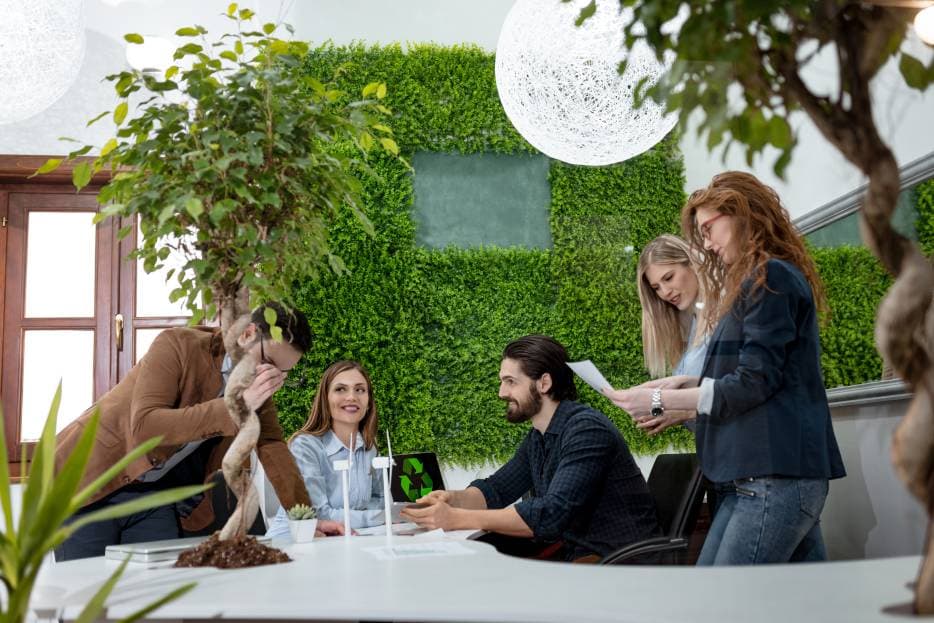
Added Value of Green Areas in Corporate Image
Beyond internal benefits, green areas play an essential role in the company’s external projection. Corporate image is not built solely through logos or advertising campaigns; it is also defined by the physical experience that facilities provide.
The presence of vegetation communicates a commitment to sustainability and responsible practices, impacting corporate reputation. Clients, investors, and partners perceive the company as aligned with contemporary values.
Green areas also help create more attractive spaces for visits, meetings, and events. This perception can influence business decisions, as the physical space acts as an extension of the brand identity.
It is undeniable that the impact of green areas in corporate spaces extends across operational, psychological, and strategic dimensions that influence the overall functioning of an organization. When productivity finds more stable conditions, well-being becomes added value.
The decision to incorporate vegetation into work environments involves understanding space as a system where each element has cumulative effects. In this sense, nature acts as a regulator that transforms internal dynamics and external perceptions.