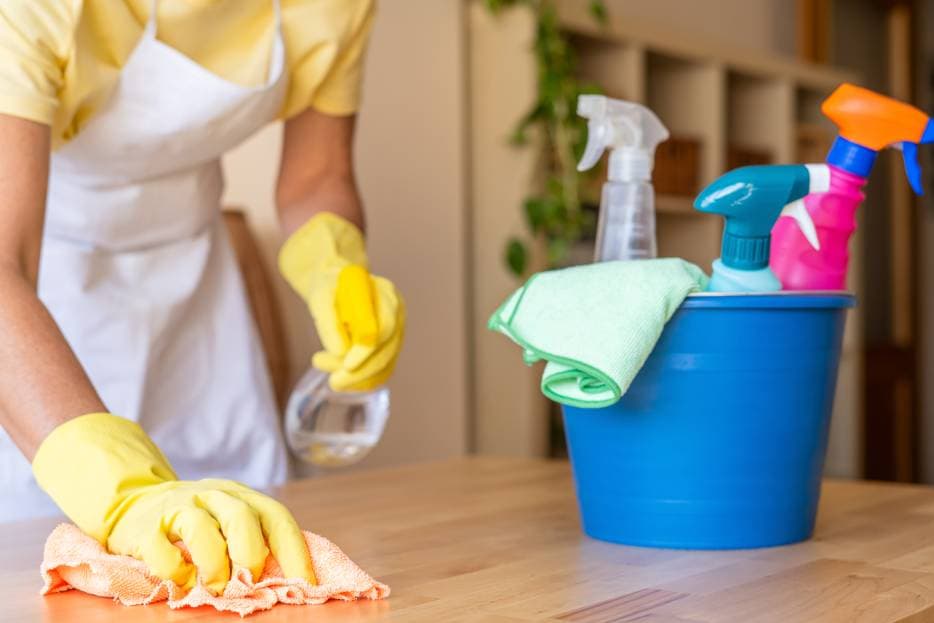
Cleaning Trends That Will Shape 2026
Professional cleaning will reach a point of technical and operational redefinition in 2026, where it is no longer evaluated only by how spaces look, but by the real effectiveness of its processes, the traceability of its results, and its impact on health.
Organizations now demand more measurable and standardized services aligned with safety, productivity, and sustainability goals. This highlights the importance of eco-friendly cleaning in educational institutions, for example, where hygiene goes beyond operations and becomes prevention, well-being, and the development of responsible habits.
This shift establishes cleaning as a strategic and preventive system integrated into the daily management of hospitals, industries, corporate facilities, and educational centers. Informal practices are being left behind, and documented, verifiable protocols adapted to each environment are prioritized.
This year, cleaning will increasingly become an inherent factor in operational continuity, risk control, and organizational reputation, with higher standards and clearer client expectations.
Reconfiguration of the Professional Cleaning Sector
The sector is moving toward a more technical, specialized, and standardized model, driven by stricter regulations and higher client expectations. Cleaning services in Monterrey reflect this transition through better staff training, differentiated protocols by facility type, and continuous performance evaluation.
Professional cleaning is moving away from generic approaches and adopting environment-specific strategies, recognizing that hospitals, industries, and schools require different criteria. This strengthens operational precision, efficiency, and service quality, avoiding one-size-fits-all solutions that are often insufficient.
At the same time, workforce professionalization is being reinforced through technical training and certifications, while contracts are shifting toward results-based models with clear quality and compliance indicators. Cleaning is becoming increasingly integrated into facility management as a foundation for safety, well-being, and organizational sustainability.
Technological Innovation Applied to Cleaning
Technology has transformed professional cleaning into a more intelligent, efficient, and traceable ecosystem, where digitalization and data analysis optimize service planning and supervision. Cleaning services in Guadalajara show growing adoption in hospitals, corporate buildings, and shopping centers.
1.- Automation of operational tasks
Automation streamlines repetitive tasks such as sweeping, mopping, and disinfecting large surfaces, reducing execution time and physical strain. This improves productivity and lowers ergonomic risks and workplace accidents, raising operational standards.
This year, more equipment will include programmable routes, automatic chemical dosing, and monitoring of water and energy consumption. Automation ensures greater service consistency and reduces unnecessary waste.
2.- Robots and autonomous service equipment
The use of cleaning robots is increasing in hospitals, airports, and shopping centers, with more advanced models offering improved navigation and adaptation to dynamic environments. This allows human staff to focus on higher-value specialized tasks.
The trend points toward hybrid cleaning models where robots and human operators work in coordination: autonomous equipment covers large areas with predictable routines, while people handle deep cleaning and disinfection.
3.- Real-time digital quality monitoring Digital monitoring is becoming essential in modern cleaning management. Sensors, apps, and control platforms allow real-time supervision of protocols and facility conditions, consolidating fully integrated, auditable, and reliable systems.
These tools strengthen transparency and enable early detection of failures. Cleaning becomes a verifiable, documented, and traceable process supported by objective data.
4.- Data-driven optimization of results
Data analysis is redefining decision-making in the sector. Metrics on time, supplies, and customer satisfaction support adjustments and continuous improvement, making cleaning more proactive, predictive, and strategically planned. Analytics help allocate resources precisely, prioritize critical areas, and customize services according to actual facility usage.
New Hygiene and Sustainability Models
With the incorporation of technology and more measurable operational models, professional cleaning in 2026 is moving toward stricter and more structured hygiene criteria, where sustainability is built into service design rather than treated as an added value.
Organizations prioritize systems that maintain high disinfection levels, reduce environmental impact, and ensure regulatory compliance, recognizing that hygiene management directly affects health, operational continuity, and institutional reputation.
1.- Lower environmental impact cleaning products
The cleaning supply market is shifting toward biodegradable and chemically safer formulations that maintain high effectiveness without harming indoor air quality or generating hazardous waste.
This is complemented by concentrated products and reusable packaging systems that optimize logistics, reduce single-use plastics, and support more responsible and traceable supply models.
2.- Reduced water and energy consumption
Resource efficiency is directly integrated into operational design through high-performance microfibers, precise dosing, and energy-efficient machinery. These solutions reduce consumption without compromising results, supported by smart equipment programming and controlled water use in specific processes, resulting in more rational and environmentally aligned cleaning practices.
3.- Advanced sanitization protocols
Sanitization is evolving toward more technical and preventive schemes, where mechanical cleaning is combined with complementary technologies such as ultraviolet sterilization, controlled fogging, and next-generation disinfectants. These protocols are no longer applied only in critical situations but are becoming part of regular routines, increasing facilities’ sanitary response capacity.
4.- Certifications and regulatory compliance
Regulatory compliance is gaining strategic importance in the sector, driving the adoption of environmental and quality certifications as a competitive requirement. Verification through stricter audits strengthens operational transparency and positions certified companies as reliable, technically prepared providers aligned with evolving regulatory frameworks.
As we can see, cleaning trends for 2026 show a transformation in how this service is conceived and managed. The integration of technology, sustainability, and professionalization is raising standards and redefining the role of cleaning within organizations.
Cleaning is no longer basic maintenance — it becomes operational safety, measurable efficiency, and tangible environmental responsibility. Companies and institutions that adopt these trends will strengthen their operations, image, and competitiveness.
This year, cleaning will be consolidated as an intelligent, traceable, and sustainable system, ready to respond to a more regulated, more aware, and more demanding environment in terms of real and verifiable results.